

Pincer grasp activities are simple, hands-on games and mealtime moments that train your baby to pick up small objects between the thumb and index finger, and babies typically start developing this skill around 8 to 10 months. The goal is supervised, low-pressure practice, not drills. Offer safe, appropriately sized items, watch closely for choking risk, and let curiosity do the rest.
TL;DR:
- Babies typically develop a mature pincer grasp between 9 and 12 months, but individual timing can vary by several weeks.
- Practice should focus on low-pressure activities like food, puzzles, and toys, with supervision and gradual difficulty adjustments.
- Use objects smaller than 1.75 inches for toys to reduce choking risk, and prioritize natural, incidental practice over correction.
- Consistent, brief practice sessions during daily routines are more effective than forced or long training periods.
- Tools like the Little Reachers toy support reaching and grasping, but real objects and patience are the most important for skill development.
Table of Contents
- What Is the Pincer Grasp, and Why Does It Matter?
- When Does the Pincer Grasp Typically Develop?
- Is My Baby Ready? Safety and Choking Guidance First
- Pincer Grasp Activities by Age and Stage
- How Often to Practice, and What Progress Looks Like
- Why LovedFully Builds Toys Around This Exact Skill
- What Actually Matters Here (and What Doesn’t)
- Start Practicing Today With the Right Tools on Hand
- Sources
- FAQ
What Is the Pincer Grasp, and Why Does It Matter?
The pincer grasp is the ability to pick up small items using the tip of the thumb and the tip of the index finger, the same precision grip your child will later use to button a shirt, hold a crayon, or pick a single Cheerio off a highchair tray. It is one of the most important fine motor skills a hand can learn, because so much of daily life depends on it: feeding yourself, turning a page, zipping a jacket.
We want to be clear about something: this is not a race. Babies build this skill on their own biological timeline, shaped by practice and interest, not by pressure from a chart. Your job is to offer opportunities, not to chase a deadline.
When Does the Pincer Grasp Typically Develop?
Hand skills follow a predictable sequence, even though the exact timing varies from baby to baby. Most infants start with a raking grasp around 6 months, dragging small objects toward the palm with a swiping motion of the whole hand. Between 7 and 8 months, that evolves into an immature pincer grasp, where the object rests along the pad of the thumb and the side of the index finger rather than the tips.
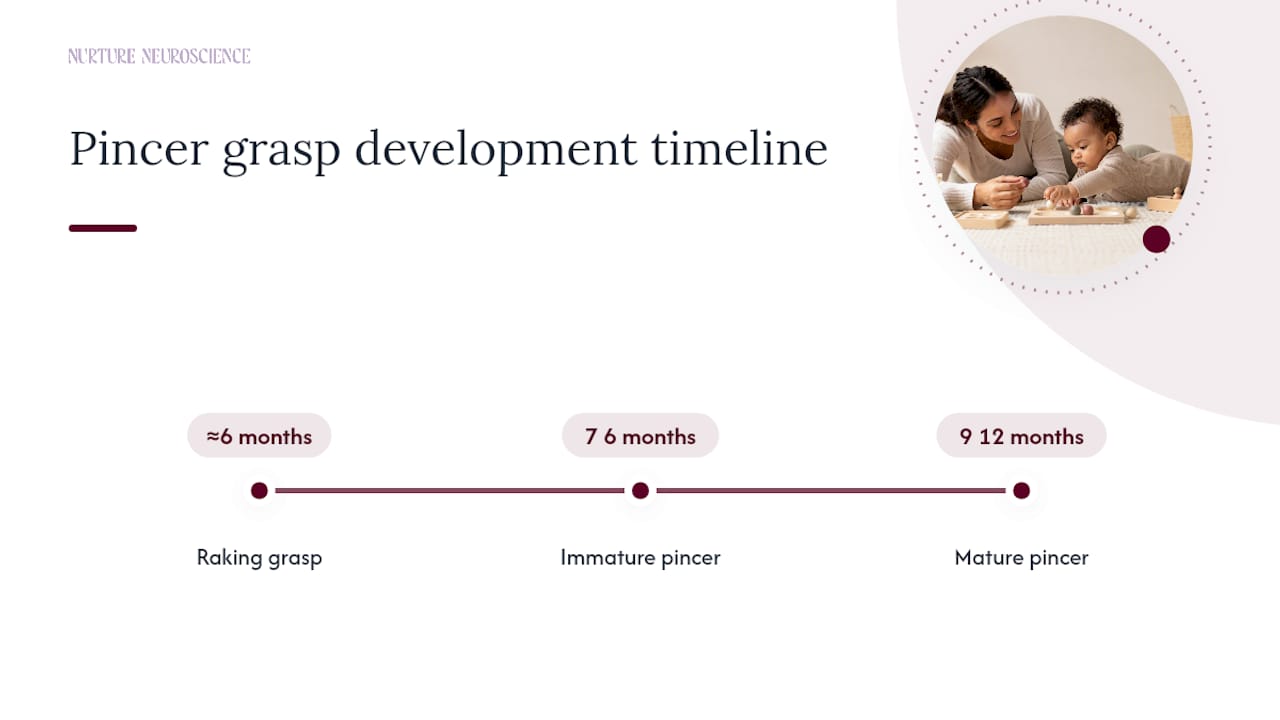
The Canadian Paediatric Society’s developmental progression guide states that mature pincer grasp, true tip-to-tip precision, generally develops near the end of the first year, roughly between 9 and 12 months. Some babies get there earlier; plenty take a few extra weeks. Research on early motor development also shows that this progression reflects finger individuation gradually replacing the reflexive whole-hand grasping newborns are born with, a real neurological process, not a matter of babies simply choosing to try harder.
Is My Baby Ready? Safety and Choking Guidance First
Before you hand your baby anything small, check for two readiness signs: can they sit upright with minimal support, and have they started reaching for and swiping at small items on their own? If yes, you can start.
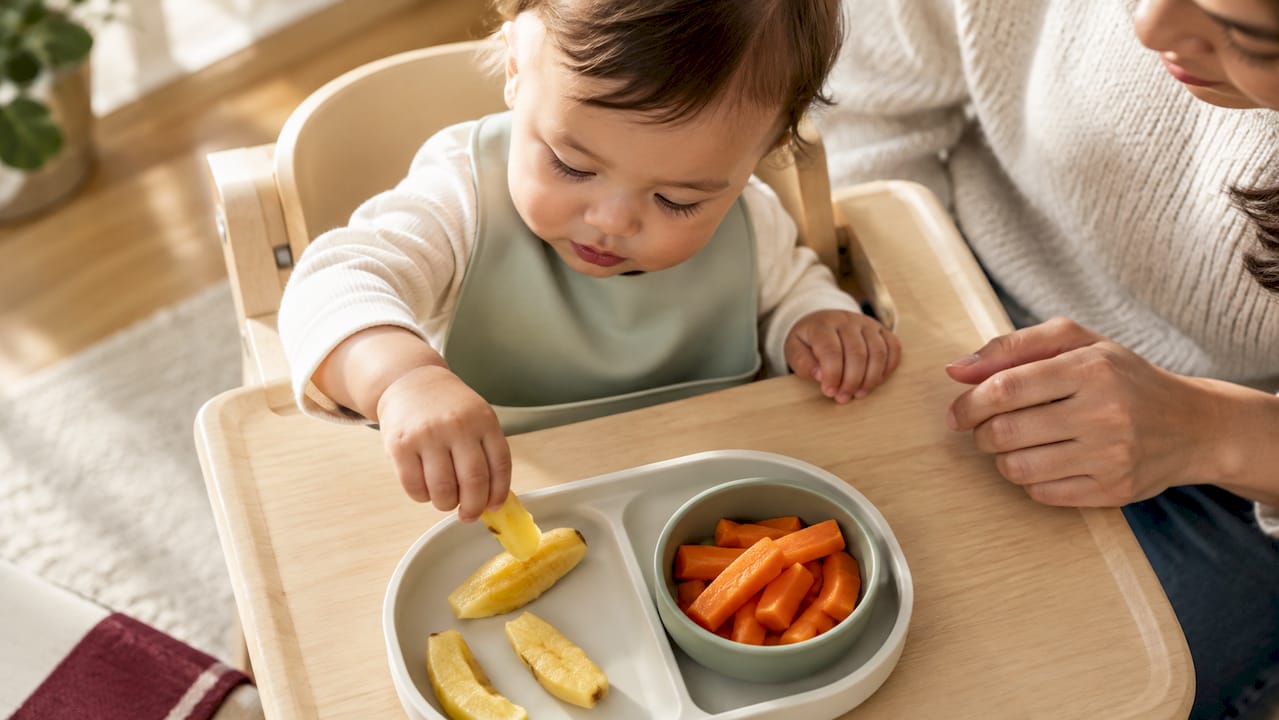
Food is the easiest and lowest-stakes place to practice. Offer finger foods cut into pieces roughly the size of your baby’s own pinky finger, soft enough to smash between two fingers, like ripe banana strips, steamed carrot sticks, or small puffs. Serve on a flat tray rather than in a bowl, so items are easy to isolate and pick up one at a time. Never leave your baby unsupervised with food or small objects, and always stay within arm’s reach during practice.
For toys and household items, check for a diameter under 1.75 inches (the standard choke-test size), avoid anything with detachable small parts, and confirm materials are non-toxic since almost everything ends up near a mouth at this stage. The Solid Starts guide to pincer grasp practice is a useful reference if you want more food-specific sizing examples.
Pincer Grasp Activities by Age and Stage
The best activities meet your child exactly where their hands are right now. Here is a practical bank organized by stage, each one built around real household materials plus a couple of purpose-made tools.
For babies, 8 to 12 months
- Finger-food self-feeding. Place three or four soft, pinky-sized pieces on a tray and let your baby pick, drop, and try again. This builds hand-to-mouth coordination alongside the grasp itself. Safety note: stay seated with your baby, and cut pieces small enough to squash easily.
- Board-book page turns. Thick cardboard pages give tiny fingers something to grip and flip, strengthening the same fingertip pinch used later for crayons. Household alternative: sturdy fabric flashcards work if you don’t own board books yet.
- Supervised tissue-pull box. Stuff a few tissues or soft scarves into an empty wipes box and let your baby pull them out one at a time. The narrow opening forces a more precise grip than an open bowl would.
- High-contrast reach games. Early attention and visual tracking come before grasping does. A high-contrast sensory toy held just out of reach gives babies a reason to extend their arm and open their fingers with intent, the groundwork for later precision.
For toddlers, 12 to 36 months
- Pom-pom and tongs transfer. Give your toddler kid-sized tongs or tweezers and a small dish of pom-poms to move between two containers. This is one of the most commonly recommended pincer-strengthening exercises in pediatric occupational therapy handouts, and it scales in difficulty as you shrink the pom-poms.
- Clothespin clips. Clipping clothespins around the edge of a bowl or box works the exact pinch muscles used to hold a pencil. Start with wider, easier-to-open pins and graduate to stiffer ones as grip strength improves.
- Sticker peeling. Peeling stickers off their backing and sticking them onto paper trains the fingertips to isolate and pull, with almost zero setup required.
- Bead threading. Large beads and a shoelace or pipe cleaner combine grasp with hand-eye coordination. Household alternative: penne pasta on a piece of yarn does the same job.
- Play-dough pinches. Rolling tiny balls of dough and pinching them flat between thumb and finger, or pinching “pinches” off a bigger lump, builds finger strength directly, according to activity guidance compiled by Growing Hands On Kids.
Pro Tip: Progressively shrink the object, not the challenge. If your toddler masters big pom-poms with tongs, don’t add a new activity, just switch to smaller pom-poms or add a narrower-necked jar. Small tweaks keep the same skill growing without overwhelming a child who’s already succeeding.
How Often to Practice, and What Progress Looks Like
You don’t need a formal training schedule. Short, frequent moments woven into routines you’re already doing work better than one long, forced session. Clinical activity sheets, including guidance from NHS Tayside, commonly recommend a few minutes of focused practice several times a week, layered on top of the incidental practice that happens at every meal.
Watch for these progress signals rather than counting days: the grip shifting from pad-to-pad to true tip-to-tip, your baby starting to use their thumb independently instead of pressing everything against the palm, and small pieces of food making it to the mouth without dropping every time.
If your child isn’t showing any pincer attempts by 12 months, favors one hand exclusively, or seems to plateau for weeks with no small changes, that’s worth a conversation with your pediatrician. The CDC’s milestone tracker is a solid reference point, and it explicitly encourages caregivers to raise concerns early rather than wait.
Why LovedFully Builds Toys Around This Exact Skill
The brand was founded by a neuroscientist and infant mental health expert, and its products are built to translate real developmental research into everyday play, not milestone pressure. The Little Reachers toy is designed around the reach-grasp-reposition sequence babies work through at this stage, and high-contrast sensory toys support the visual attention and tracking that comes before a confident reach. Responsive, low-pressure play, offered when your baby shows interest, does more for hand development than any drill ever will.
What Actually Matters Here (and What Doesn’t)
Most advice on pincer grasp treats it like a checkbox: hit the milestone, move on. That framing misses the point. The research is consistent that this skill develops through repeated, low-stakes exposure, not through correction or coaching. If you’re hovering, narrating every attempt, or re-doing your toddler’s pinch for them “to show them how,” you’re likely slowing things down, not speeding them up.
The bigger mistake we see is treating screens as a substitute for hands-on time. No app teaches a fingertip to isolate from a palm. Only real objects, real resistance, and a real hand trying and failing and trying again can do that.
Start with food. It’s already part of your day, it’s low pressure, and it gives your baby dozens of natural repetitions before you’ve added a single toy. Add tools like tongs or threading beads once the grasp itself is emerging, not before. And resist the urge to compare your baby’s timeline to anyone else’s. A few weeks of variation inside that 9 to 12 month window is completely normal.
— LovedFully
Start Practicing Today With the Right Tools on Hand
You don’t need a shelf full of gadgets to build this skill, just a few well-chosen tools that match where your baby’s hands actually are right now. Some products are designed around this kind of stage-specific practice, translating developmental science into simple play you can start using this week.
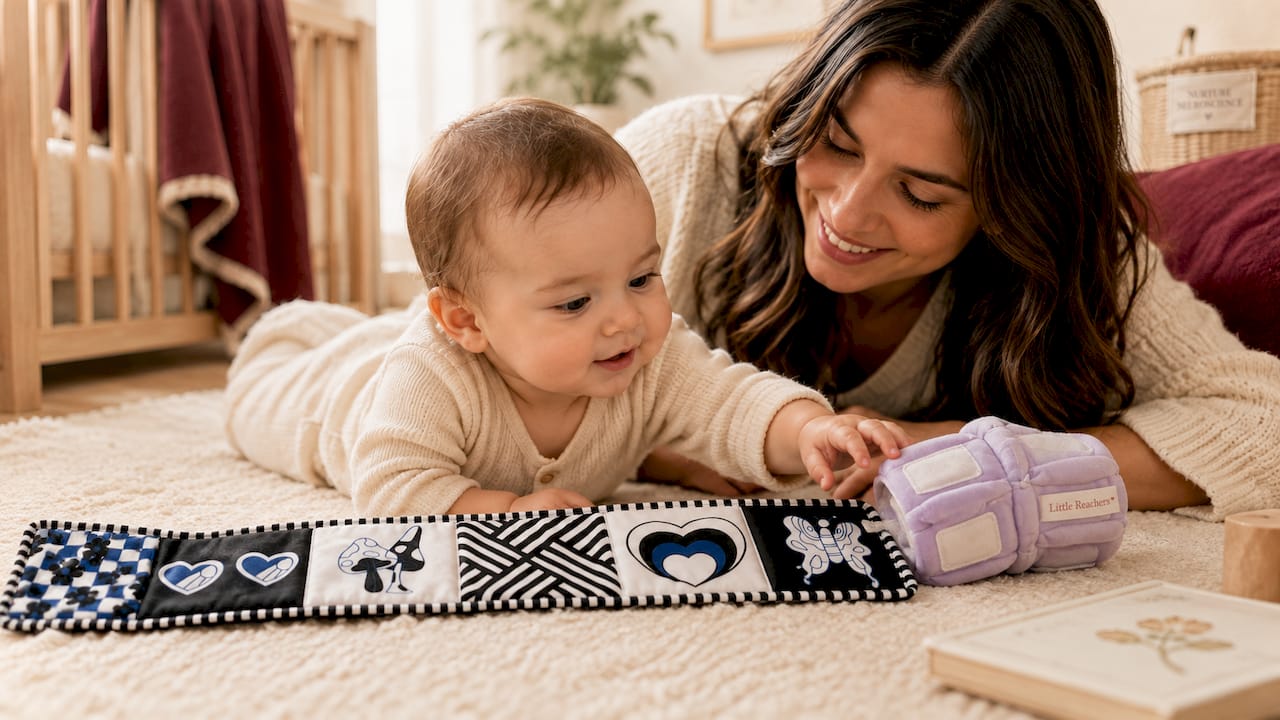
The Little Reachers developmental reaching toy ($90.00) is built specifically for the reach-and-grasp stage that leads into pincer skills, giving your baby a purposeful reason to extend, grip, and reposition with intent. If you’d rather build a full starter set, browse the complete LovedFully collection for activity cards and sensory toys that pair naturally with the games described above. Pick one tool, add it to your next playtime, and watch what your baby does with it.
Sources
FAQ
At What Age Should a Baby Develop a Pincer Grasp?
Most babies show a mature, tip-to-tip pincer grasp by around 12 months, after passing through raking and immature pincer stages starting around 6 to 8 months. Some variation is normal, but talk to your pediatrician if you see no pincer attempts at all by 12 months.
What Are Good Toys for Learning the Pincer Grasp?
Toys with small parts to grip, narrow openings, or textured surfaces work best, including reaching toys like Little Reachers, board books, and simple household items like a tissue box with scarves tucked inside. Kid-safe tongs, threading beads, and clothespins become useful once your toddler is past the early infant stage.
What Activities Help a Toddler Strengthen Pincer Grasp?
Pom-pom transfers with tongs, clothespin clipping, sticker peeling, bead threading, and play-dough pinching are among the most commonly recommended activities for pincer grasp development in pediatric occupational therapy. These work well from around 12 months through the preschool years, adjusted for object size and difficulty.
How Do You Teach a Pincer Grip?
Offer small, safe objects, like soft finger foods or pom-poms, and let your child attempt the grasp themselves rather than physically moving their fingers for them. Model the tip-to-tip pinch yourself during play, then step back and give your baby space to try, fail, and try again.
How Much Does the Little Reachers Toy Cost?
The Little Reachers developmental reaching toy is $90.00, a one-time purchase. Current prices for all LovedFully products are listed on the shop page.